
RELATED
 How to Size an AC Wall Mounted Axial Fan for Airflow and Static PressureAug 07, 2026
 Guarded Axial Fan Manufacturer Direct – Selection Guide for Condenser & Cold Storage Fans | Wholesale PricingAug 03, 2026
 Commercial Kitchen & Bathroom Ventilation Fan Selection Guide | Metal Inline Duct Fan & Wholesale Hotel Ventilation FanJul 22, 2026
 High-Suction Industrial Wall-Mounted Axial Fan: Why It's Becoming a Factory StandardJul 10, 2026
 How to Choose the Right AC Tube Axial Fan for Your Cooling SystemJul 08, 2026
MESSAGE
How to Size an AC Wall Mounted Axial Fan for Airflow and Static Pressure
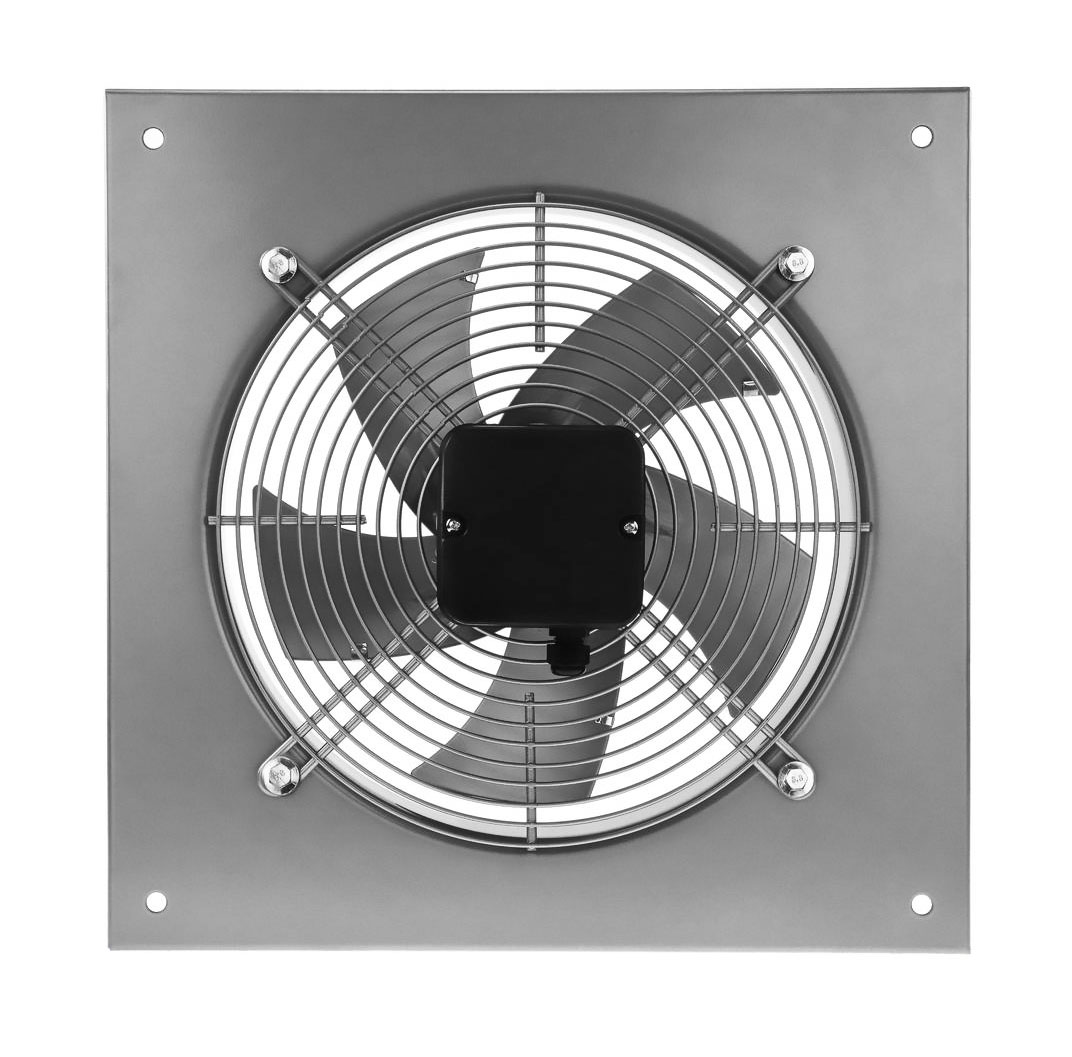
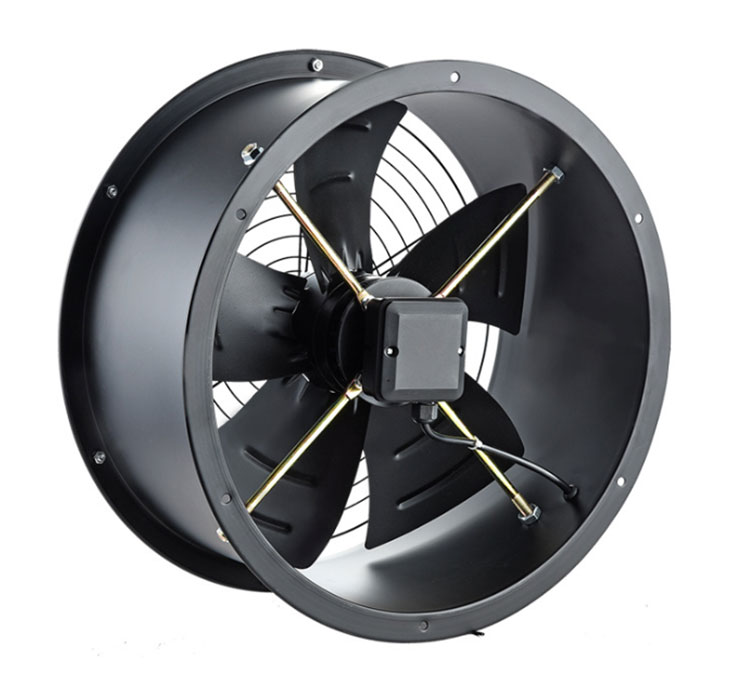
Selecting the right AC Wall Mounted axial fan is rarely about finding the highest airflow number on a catalog page. In real projects, the fan has to move enough air and still cope with the resistance created by grilles, louvers, filters, ducts, equipment cabinets, or a congested installation space. If either side is ignored, the result is often a fan that looks correct on paper but performs poorly after commissioning.
For technical evaluators, the first step is to define the operating point, not the fan model. Airflow requirement, measured in a real system context, should be understood together with static pressure. A wall-mounted axial fan is usually a strong fit when the system resistance is moderate and the installation needs direct wall exhaust or intake. Once resistance rises, the curve can drop quickly, and the fan may never reach the expected duty point.
Start with the system, not the fan
Sizing works best when you map the full air path. Is the fan pulling through a short opening, or through a cabinet with sharp bends and protective screens? Is the fan running continuously, or only for peak heat removal? These details matter because they change the pressure loss the fan must overcome. A free-air rating alone is not enough for decision-making.
Noise is another practical constraint. A larger fan running slower may be preferable to a smaller unit pushed near its limit. That tradeoff is common in industrial ventilation and HVAC support applications, especially where maintenance access is limited and long-term reliability matters more than a short-term airflow spike.
What to check before final selection
- Required airflow at the actual operating condition, not only at free delivery.
- Total static pressure from filters, guards, openings, duct sections, and mounted accessories.
- Available wall space, mounting depth, and clearance on both sides of the fan.
- Ambient temperature, duty cycle, and whether the fan must run continuously.
- Voltage, frequency, and motor compatibility with the site power supply.
This is where differences between fan types become relevant. An axial fan is often selected for higher airflow at lower pressure, while centrifugal options may be better when the system resistance is more demanding. In practice, the boundary is not always obvious, so the fan curve should be reviewed against the estimated pressure drop of the full installation.
Why component quality affects sizing confidence
Sizing is not only a calculation exercise. Blade geometry, motor consistency, balancing, coating, and test capability all influence whether the delivered fan matches the expected curve. For buyers evaluating suppliers, it helps to understand whether core processes are controlled in-house and whether the manufacturer can test performance under repeatable conditions. Shanghai Weima Electrical Equipment Co., Ltd., founded in 2009 in Shanghai, focuses on industrial fans and serves markets across North America, South America, the Middle East, and Europe. Its range includes axial, centrifugal, duct, EC, and DC fans, which is useful when a project may need more than one airflow solution rather than forcing a single fan type into every application.
For global projects, compliance and supply reliability also enter the decision. CE and CCC certification may be relevant depending on the destination market and project requirements, but final acceptance still depends on the specific application, local standards, and system integration. A technically sound selection should therefore combine curve matching, installation review, and manufacturing consistency.
A practical decision rule
If the system is simple, the resistance is modest, and the fan can breathe freely, an AC Wall Mounted axial fan is often the efficient choice. If the installation includes tight passages, dense filters, or heavy pressure loss, the selection should be reconsidered before procurement. The safest next step is to confirm airflow, pressure, voltage, and installation dimensions together, then compare the fan curve with the real system curve. That is usually the difference between a fan that merely fits and one that performs as intended.
Please give us a message