
RELATED
 Enclosure Fan Placement: Preventing Hot Spots in Industrial Control CabinetsNov 09, 2026
 Sizing Industrial Enclosure Fans by Heat Load and Ambient TemperatureOct 19, 2026
 AC Double Inlet Centrifugal Fan Noise, Efficiency, and Maintenance: A Full 2026 EncyclopediaSep 16, 2026
 Centrifugal Fan Selection Guide: Application and SelectionAug 18, 2026
 How to Size an AC Wall Mounted Axial Fan for Airflow and Static PressureAug 07, 2026
MESSAGE
Enclosure Fan Placement: Preventing Hot Spots in Industrial Control Cabinets
In an industrial control cabinet, a fan can be correctly sized and still deliver poor cooling if it is installed in the wrong position. Hot spots often appear around drives, power supplies, transformers, contactors, braking resistors, and other heat-producing components. The result may be shortened component life, nuisance trips, unstable control performance, and maintenance work that could have been avoided during cabinet design.
Effective enclosure fan placement is therefore a system decision, not simply a matter of cutting a mounting hole. Airflow direction, component arrangement, ventilation openings, cabinet sealing, and actual temperature measurements all need to be considered together.
Start with the cabinet’s natural airflow path
For many control cabinets, the most practical arrangement is to bring cooler air in through a lower or lower-side opening and exhaust warmer air through an upper or upper-side opening. Since heated air rises, this arrangement supports the cabinet’s natural convection rather than working against it. The intake and exhaust should not be placed too close together; otherwise, part of the discharged warm air may be pulled directly back into the cabinet.
The fan should also be positioned so that air reaches the heat source instead of taking the shortest path around it. A fan mounted near the bottom may provide little benefit if a dense wiring duct, mounting plate, or partition blocks the flow before it reaches the power electronics. In larger cabinets, one strong airflow path is not always enough. Several zones may require separate circulation or exhaust planning.
Place heat-producing components with airflow in mind
Component layout should be completed alongside the cooling concept. High-heat devices should not be grouped tightly together unless the airflow has been designed for that concentration. Variable frequency drives, rectifiers, power supplies, and resistive loads generally deserve more attention than low-heat signal devices. Temperature-sensitive PLC modules and communication equipment should not sit directly in the discharge stream from a hot component.
A useful design review asks a simple question: where will the air go after it enters the cabinet? If the answer is unclear, the fan location is probably being selected too early. Keep cable ducts, barriers, and spare mounting hardware from forming dead zones. In tall enclosures, check the upper section separately; a lower intake fan may not prevent heat accumulation near the roof.
Choose the fan according to system resistance
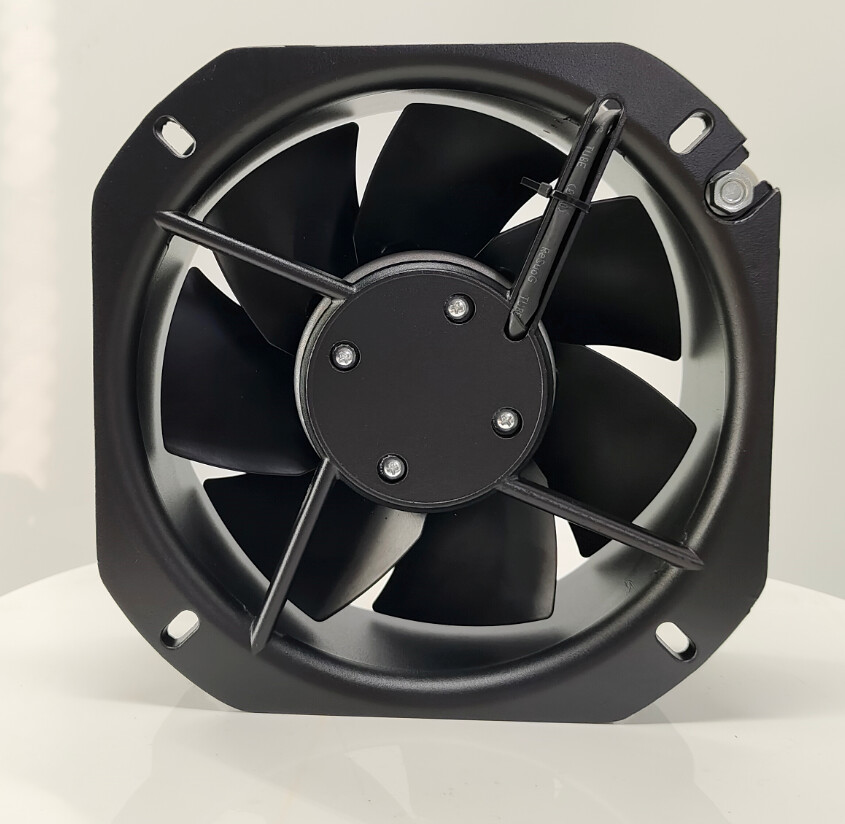
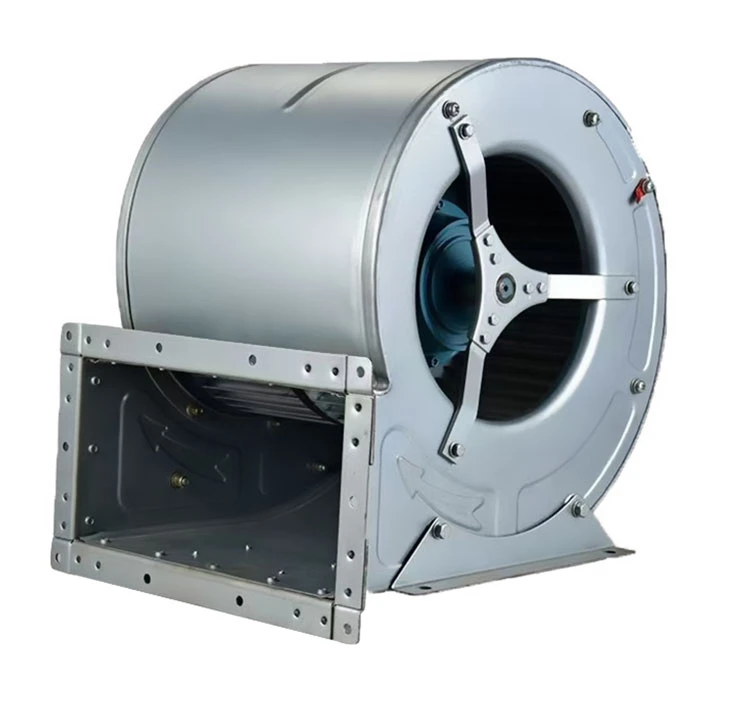
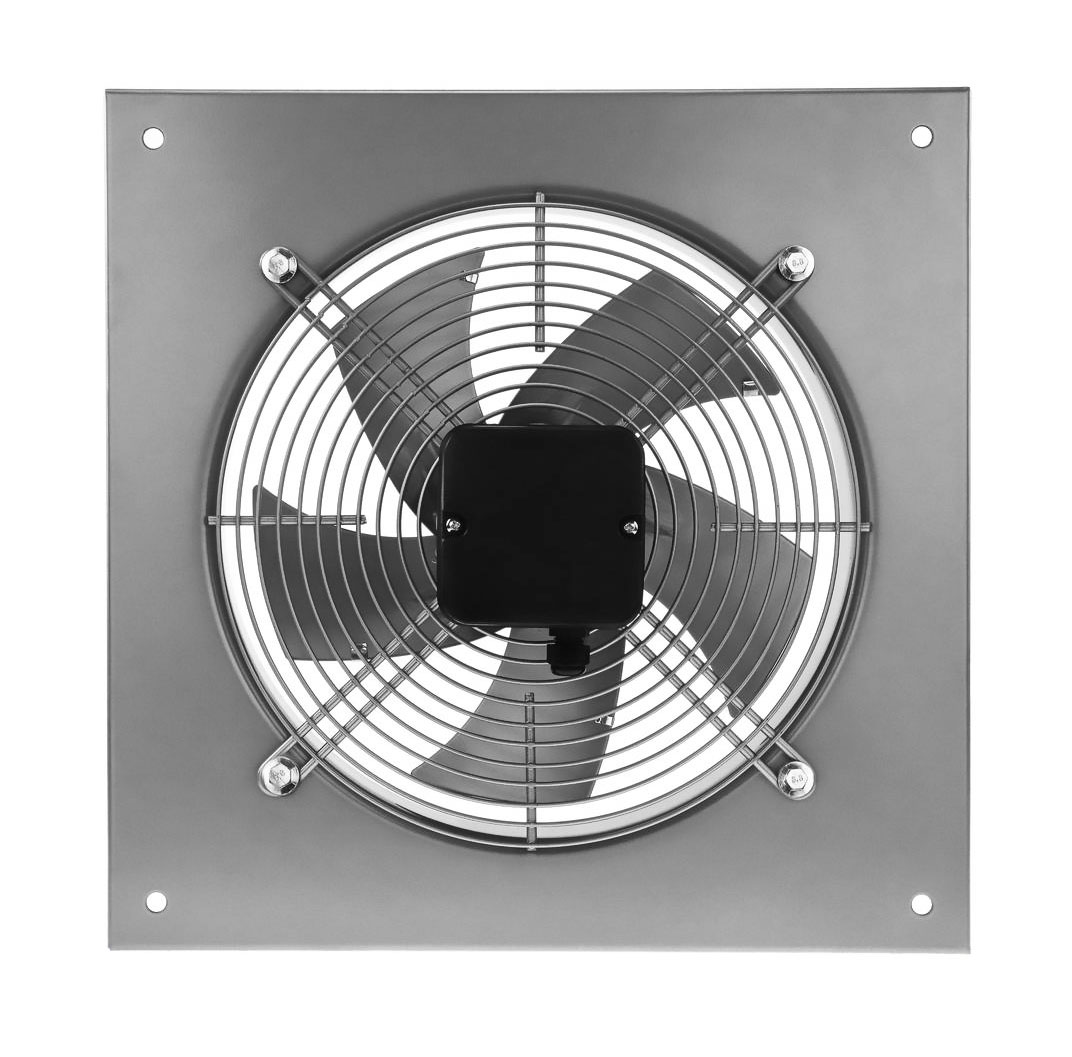
An axial industrial electronic enclosure fan is often suitable for moving air through a relatively open cabinet with moderate resistance. When the design includes filters, narrow passages, ducts, or compact assemblies, pressure capability becomes more important than free-air airflow alone. A centrifugal fan may be more appropriate in such conditions because it is designed to maintain airflow against higher resistance.
EC and DC fan options can also be useful where variable speed, compact control, or energy management is required. The final selection should be based on the fan curve, operating environment, voltage, noise requirements, dust conditions, and the pressure loss of the complete ventilation path. Comparing only the headline airflow value can lead to an undersized solution once a filter becomes loaded.
Do not overlook openings, filters, and maintenance
A forced-air cabinet needs a complete intake and exhaust route. If the exhaust opening is too small, the fan may run continuously without removing enough heat. If the intake filter becomes clogged, airflow falls while internal temperature rises—often without an obvious electrical fault.
Access for filter cleaning and fan replacement should be included in the mechanical design. In dusty industrial environments, the best fan position is not necessarily the one that gives the shortest airflow path; it is the one that also allows safe, practical servicing. Enclosure protection requirements and local installation standards should be checked before selecting open ventilation, filtered ventilation, or a closed-loop cooling method.
Verify the result with temperature monitoring
Airflow modeling can guide the design, but commissioning measurements are still valuable. Check the cabinet inlet temperature, outlet temperature, and the surface or internal temperature near the most heat-sensitive components under realistic operating load. If one corner remains noticeably warmer, changing the fan direction may not solve the problem; a blocked path, poorly positioned component, or inadequate exhaust opening may be the real cause.
Shanghai Weima Electrical Equipment Co., Ltd., established in Shanghai in 2009, develops and manufactures axial, centrifugal, duct, EC, and DC industrial fans for ventilation, HVAC, machinery, new energy, and related applications. Its production chain includes motor manufacturing, fabrication, painting, and testing, with CE and CCC certifications and export experience across more than 20 countries and regions. For a control cabinet project, this range can support different airflow and installation requirements, but the correct model still depends on the enclosure layout and measured system resistance.
The most reliable approach is to define the heat sources, map the airflow path, select the fan against actual resistance, and confirm temperatures after installation. Good enclosure fan placement is a small mechanical decision with a direct effect on cabinet reliability.
Please give us a message