
RELATED
 AC Double Inlet Centrifugal Fan Noise, Efficiency, and Maintenance: A Full 2026 EncyclopediaSep 16, 2026
 Centrifugal Fan Selection Guide: Application and SelectionAug 18, 2026
 How to Size an AC Wall Mounted Axial Fan for Airflow and Static PressureAug 07, 2026
 Guarded Axial Fan Manufacturer Direct – Selection Guide for Condenser & Cold Storage Fans | Wholesale PricingAug 03, 2026
 Commercial Kitchen & Bathroom Ventilation Fan Selection Guide | Metal Inline Duct Fan & Wholesale Hotel Ventilation FanJul 22, 2026

MESSAGE
Title: Forward Curved Centrifugal Fan: Key Applications, Installation Tips & Selection Guide
When space is tight, noise must be low, and airflow volume is king — the forward curved centrifugal fan is the proven solution. From HVAC retrofits to cleanroom ventilation, this fan type solves three core problems: limited installation space, strict noise limits, and the need for energy-efficient constant airflow.
1. Main Application Scenarios & Problems Solved
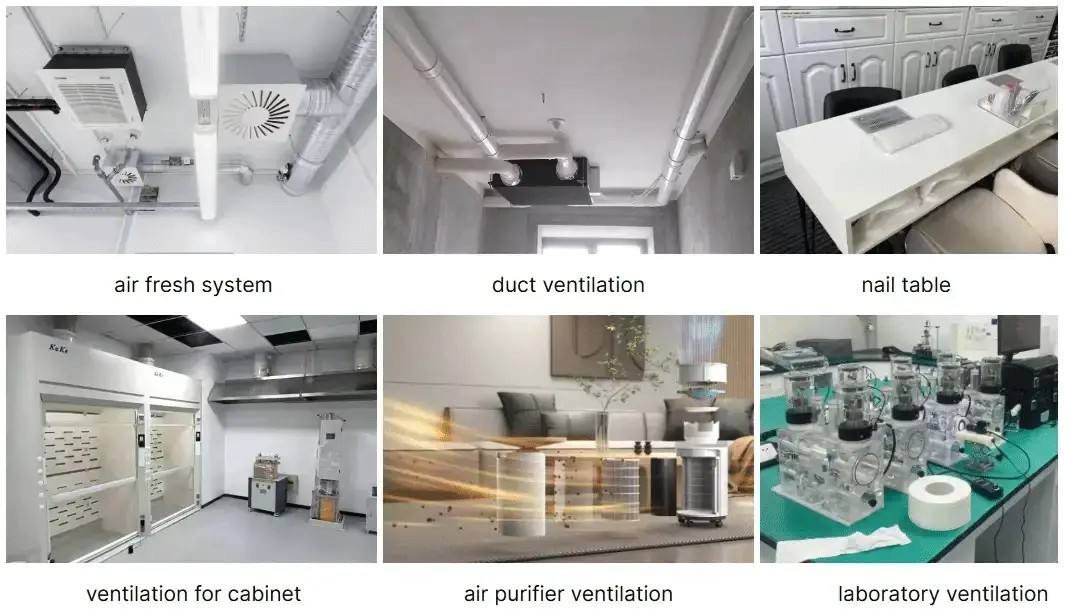
(1)Commercial Building HVAC Systems
Scenario: Central air conditioning terminals in office buildings, fresh air units in shopping malls, hotel room ventilation.
Problem solved: Limited ceiling space and excessive noise from traditional axial fans. Forward curved fans are compact and operate quietly (<50 dB), meeting comfort requirements.
(2)Cleanrooms & Medical Environments
Scenario: Laminar flow supply in operating rooms, positive pressure maintenance in pharmaceutical workshops, laboratory exhaust.
Problem solved: Need for uniform, low-turbulence air distribution to avoid dust disturbance. Forward curved impellers provide smooth airflow, ideal for upstream of HEPA filtration systems.
(3)Agricultural & Livestock Ventilation
Scenario: Poultry/pig barn air exchange, greenhouse temperature and humidity control.
Problem solved: Humid, dusty environments requiring long-term continuous operation. Forward curved fans feature robust construction and simple maintenance, capable of withstanding harsh conditions.
(4)Industrial Dust Collection & Exhaust Treatment
Scenario: Woodworking shop dust collection, welding fume extraction, spray booth ventilation.
Problem solved: Need for high-volume, low-pressure continuous suction with low duct resistance. Forward curved fans offer optimal efficiency in such systems.
2. Installation Tips
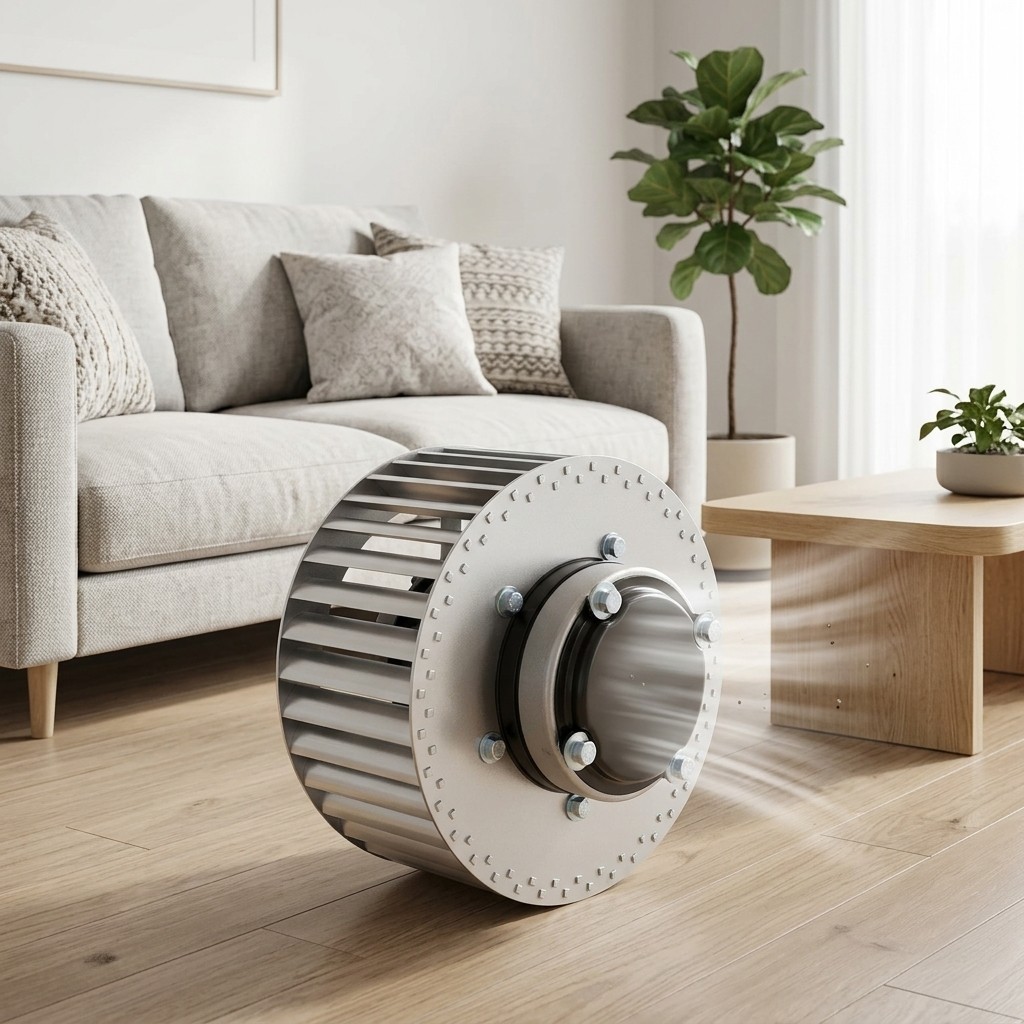
3. Core Selection Parameters
(1)Airflow & Static Pressure Matching
Forward curved fans suit low static pressure (100–800 Pa), high airflow scenarios; for static pressure above 1000 Pa, consider backward curved fans instead.
(2)Motor Type
AC motor: Lower cost, suitable for fixed-speed operation.
EC motor (electronically commutated): 30%–40% higher efficiency, speed-adjustable, ideal for variable air volume (VAV) systems.
(3)Material Selection
Standard environment: Galvanized steel.
Corrosive environment (chemical plants, coastal areas): Stainless steel 304 or aluminum alloy.
Explosion-proof environment: Aluminum impeller + copper-core motor.
(4)Noise Limits
Hospitals/offices: Require <45 dB(A), choose silencers or low-speed models.
Industrial workshops: Typically allow 70–80 dB(A), standard models suffice.
4. Summary
The core value of the forward curved centrifugal fan is: maximum airflow in minimum space, combined with low noise and high reliability. When selecting, focus on three dimensions — static pressure range, motor type, and material compatibility — to find the best solution for your project.
For specific model recommendations or selection calculation tools, please contact us.
Get Recommendations and Bulk Prices
Please give us a message